An overture of death heralds Omaha. A wretched toll to the boatmen of the underworld.
Lloyd William Packwood has died.

We are left to decode centarian gossip. What does “visit” mean? How old was Lloyd? To what do we deposit his death? There is no birth record and no marked grave for him in Woodland Cemetery in Big Bend near Fremont. It is possible he was born in Iowa. There is a death record in the Nebraska archives – the only other datum that confirms his existence.
One year has passed since Rex left Muscatine for Davenport and Davenport for Omaha.
Omaha was a twisted utopia of crime, a decade deep into an era where the city was ruled by a gangster named Pickhandle. The city was “Wide Open”, meaning that it aimed to embrace the sinful habits of man rather than attempt to abolish them. The argument was that to police and curtail crime, the city should let it out in daylight where it can be better controlled. The intent was that Omaha would act as a sink for the deliquent; drawing gambling, prostitution, and other vice from hundreds of little prarie towns that would surely be sinless otherwise. This reputation was spread far and wide; here is an example from Connecticut:

Consider the Open City policy an early attempt at the goals of Prohibition, however perverse that seems. In practice it was meant to remove drunken criminality from those otherwise innocent plains towns. You might remember them also as the falsely-idyllic petit kingdoms being obliterated by the encroaching railroad and all its blusterous culture. A cartoon of townsfolk running the drunks out while the train brings more drunks …
It is likely that Rex was aware of the reputation of Omaha. There are countless entries from his time in papers nationwide concerning the triumphs and ills of the Open City policy. It’s much more likely he went there because he was one amongst the scalawags Omaha was meant to attract. He was some sort of scoundrel.
We can begin to pick at his motivations – was it the easy sexuality, the opium, the gambling, the liquor, or some occult vice that drew him? Or was he driven west by the Freemasons, the KKK, the socialists, the trade unions, or the puritans? He could have easily gone to dozens of other cities if a city is what he sought.
Rex “vamoosed” from Muscatine to the yet wilder urbanized edge of the Frontier.
Toward and into a utopia of debauchery.
An Oz of injustice.
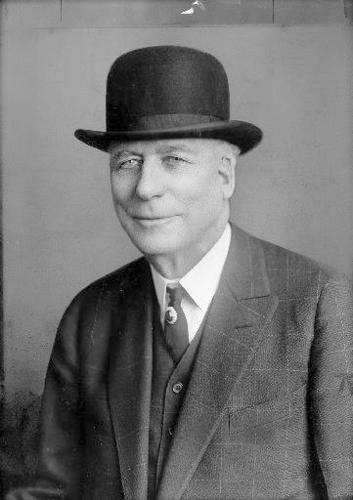
Dennison had to redouble his efforts to keep his hands around Omaha. It was 1906 and his robust criminal enterprise included control of the mayor-in-absentia and the editor of the Daily Bee – but the mayor had died leaving the machine with a beclouded future.
They called him Pickhandle, and he had lieutenants in every district, a hand in every scheme and con. It was said no crime took place in Omaha without his approval, and when crime did occur the perpetrator was often brought to answer him before the police were consulted. He had sent the mayor out to Colorado to convalesce, but now his hand was forced by the cold reality of a corpse. His machinations were wide and stoic, nevertheless the whole game would be at risk without control of the mayors office.
Dennison ran his empire of gambling and vice halls from headquarters kept in the Budweiser Saloon at 1409 Douglas in the heart of what would become known as the Sporting District, where “sport” refers to gambling or prostitution. Classically gangster, the Budweiser featured a nondescript warehouse out back and a darkened egress to the back alley for hurried escapes.
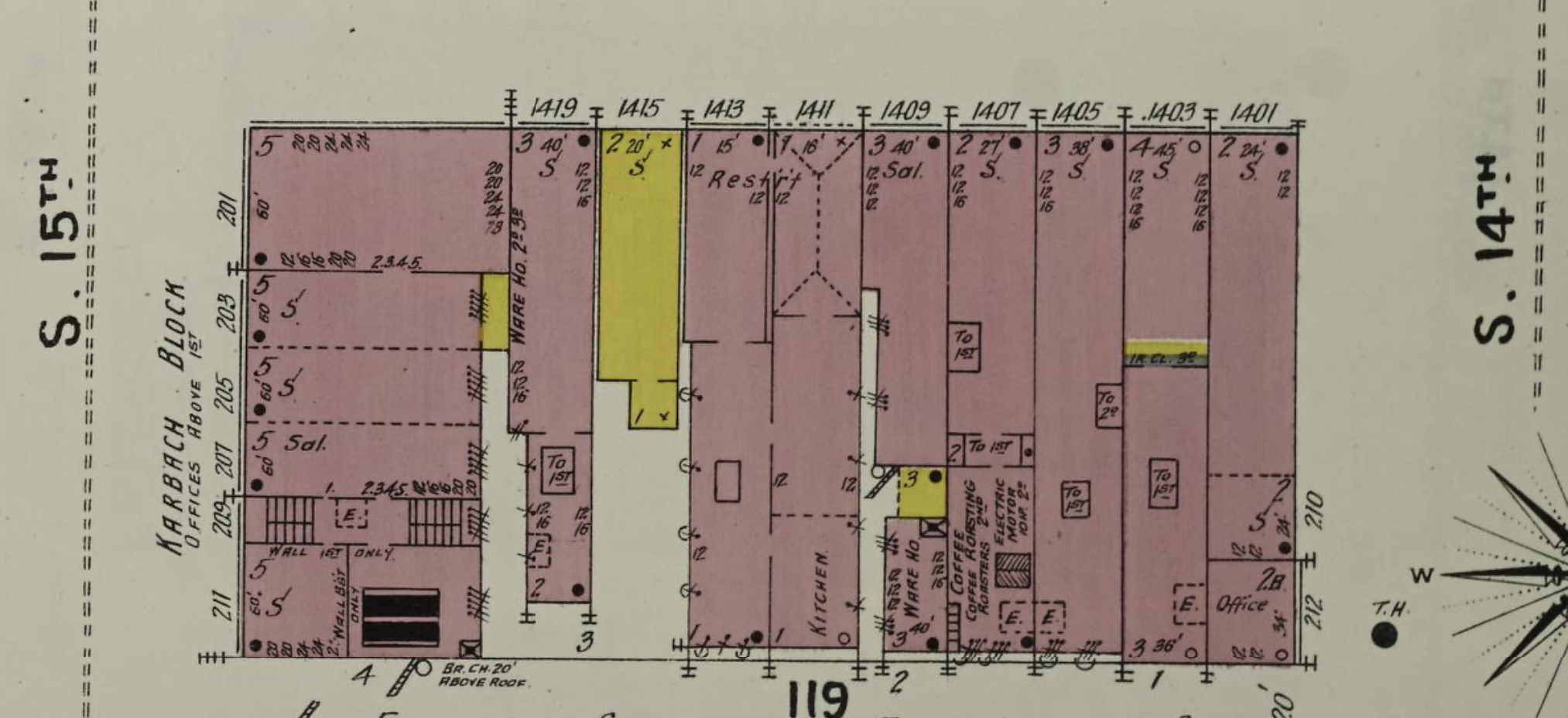
It was a “red light district” most assuredly, the Sporting District drew the most recidivist; graft, gambling, and prostitution were the expectation.
In the present the whole area has been razed; the earth scraped clean. Replaced by highway, urban park, and modern buildings. History cannot exist without artifacts, and Pickhandle’s Omaha has been all but erased. Consider the astounding feat of removing millions of bricks that had been diligently stacked into hundreds of pleasure houses, saloons, and card halls furnished with thousands of velvet tables, straw mattresses, kegs and gas lamps and tchotchkes, occupied by scores yet of working women, hucksters, snake oil salesmen, drug dealers, artists, and thieves — each with their own satchel or handbag and small collection of garments, jewelry and keepsakes.
All controlled by the acrid bejeweled hands of Dennison and his underworld.
Dennison had come to Omaha around 1892 and found it to be in criminal disarray. Happenstantially prior to his arrival, the “Big Four” gamblers that notoriously ran the Omaha underworld had been run out by a successful scare from the long arm of the law. This brush with Hammurabi convinced the four of them to collect their earnings and shimmy westward for new territory.
Into this vacuum of Orphean power came Tom Dennison.
Pickhandle.
A shrewd and hard man, he stood six feet tall, solidly built and now somewhere in his fifth decade. In photos he reads as a kindly old grandfather with a terrible secret, as tough as a pile of leaves which obscures a rake and harrow — cryptically dangerous. A wry smile tickles the edges of his lips as if he is in on a joke he knows we can’t understand. They say he was quiet and reserved barring occasional outbursts, preferring to have his agents speak and distribute violence for him.
A gentleman.
Pickhandle had roughed his way from ranch laborer to “floor walker”, at a casino called “The Texas” before staking his earnings into his own gambling halls. Numerous testimony recorded in the journals of his time accuse him of mafia-esque behavior: bribes, favors to officials, violence toward apostates. He was accused of masterminding a famous diamond train heist back in the Gay 90’s and taken to court for his involvement with much fanfare. Yet whenever he found himself in court he cartoonishly managed to avoid a guilty verdict; always a juror insistent on deadlock or suddenly missing. His underworld empire was embedded and vigilant.
So it’s 1906 and Republican Mayor Moores, the Dennison Machine Man, has finally suffered the end of his long battle with declining health. He had spent something of two years in Colorado and Arizona for treatment, the papers assuring the citizens at home of his constant improvement.
Pickhandle goes to work to maintain his racket through the changeover and sets his sights on charming newcomer Jim Dahlman. Classic election rigging is outlined in the by the Omaha Daily Bee below:

For a few months it’s chaos and unclear who Dennison backs and who will back Dennison. Somehow most of this out in the open. It must have been a time of tense anticipation for the lower order crime lords in Omaha. Sweaty.
In an upset, or perhaps exactly as planned by Pickhandle, the 1906 election to replace the crooked deceased mayor goes to the previously unknown Democrat “reform” candidate, “Cowboy” Jim Dahlman.
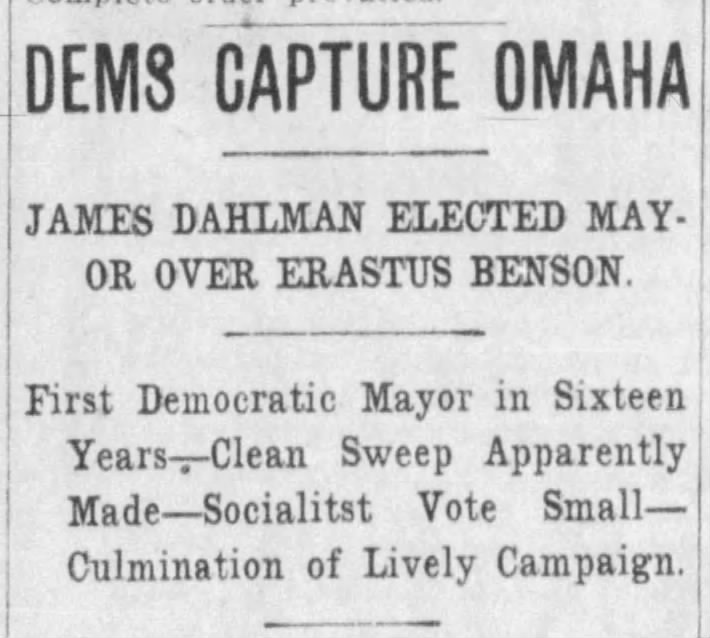
James C. Dahlman had come to the nickname “Cowboy” in the most legitimate of ways by plying that trade further west. A short man with an elvish disposition he was the ideal candidate for a fine bowler hat and giant key to the city. They say he killed his brother-in-law and fled the state until hearing it was ruled self defense. A small, punchy cartoon of a man.
The reformers that elected him – combined forces of the anti-saloon, anti-gambling, and anti-vice movements – felt they had finally broken the Dennison machine by placing Dahlman as mayor.
Rather than crush the vice that had overwhelmed Omaha, the election of Dahlman only cemented it. Moores had been openly warm with Dennison; Dahlman pretended that Dennison didn’t exist. Likewise the opposition maintained the charade that they had defeated Dennison and for the next thirteen years Dahlman would be Omaha’s “Perpetual Mayor” – with the silent hand of Dennison always on his shoulder. This arrangement suited Dennison quite well and his empire, now endorsed yet invisible, could grow unabated.
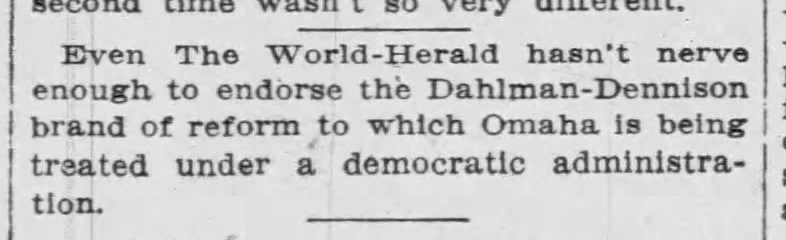
Cowboy Jim was serial elected through the ‘Teens in landslides that were always overwhelmed by the wards under Pickhandle’s control. Accusations of ballot stuffing, double voting, and false registration haunt the period. It’s hard to beat the “machine” when everyone in the largest and poorest wards votes for the candidate chosen by Dennison. That’s really what they meant by “machine” – a twisting of democracy – swinging the mob under the fist of one decider.

In the chaos of this crowd we pick out a familiar face. It’s right around this time that Rex moved to the heart of the Sporting District, to the bullseye of organized vice. He lived at 1915 Farnam St, two blocks west of City Hall and the Omaha Bee Building, and half of a mile from Pickhandle’s sanctum at the Budweiser Saloon. Planted within the armpit of Dennison influence.
Today 1915 Farnam is a parking lot saddled by buildings that post date our tour. The entire area has undergone numerous revivals and little persists except the names of streets. The main drag of the Sporting District was crushed by the Eisenhower Corridor expansion in the crusade against blight. Mere blocks to the north had been the most notorious center of prostitution, “The Cribs”. Once a block sized village of tar paper shacks with ~1200 sex workers. Today it’s the pleasant Pioneer Courage Park, dedicated to the pioneer struggle and in total denial of it’s sexual past.
Rex showed a strong preference for the gas lamps and bosoms of the vice districts, areas later destroyed in the war against “blight”. It can’t be said enough that this entire section of Omaha was knocked down and trucked out. No funeral.

In the 1907 Omaha city directory Rex appears as a barber at the Millard Hotel at 13th and Douglas, just one block away from the Budweiser Saloon and headquarters of Dennison. This would be a high traffic area with a lot of opportunity for working the razor along with any side hustles that had developed. There would be a constant rush of new and old faces as people filtered into and out of the wilder west. A whirlpool of grift.
This below clipping speaks to the shop where Rex worked:

The Millard was one of several hotels run by a man named Rome Miller, a kind looking, soft man with an intentionally contemptuous face. In every photo he holds his guise in this same way, a forlorn stare that says “trust me” yet elicts no trust. A man who needs a vest and watch chain to look complete. One can hear him harumph through time and space.
He had run a series of restaurants on the train line through Fremont and the Trans-Mississippi and International Exposition in the 1890s where he had often served Cowboy Jim as a customer and the two had become chums. Now in Omaha they would often appear at events together, sharing stories from their years in Fremont. Good friends. It is speculated widely that Rome was able to build his hotel network by greasing the wheels with his friendship with Mayor Dahlman. We can think of Rome as a legal subsidiary of the Dennison Machine. Draw a line from Dennison to Dahlman, from Dahlman to Miller and finally from Miller to Rex, a simple barber.
In 1906 Miller was a successful Omaha hotelier in the midst of a court battle with local real estate icon Peter Iler over the future of a hotel expansion project. After frustrating all his options, Rome opts to open a new hotel of his own, The Rome.

This was a good time for Rome.
This was a good time for Rex.
He and Mittie are well on their way to establishing lifestyles far from the sweaty dirt of the farm. While the train was busy remaking the Iowa frontier into commodity batteries they fashioned lives further out on the edge. Chasing the sunset of the borderlands over the horizon. If Rex is guilty of anything it is following the call of the waning vice lands.
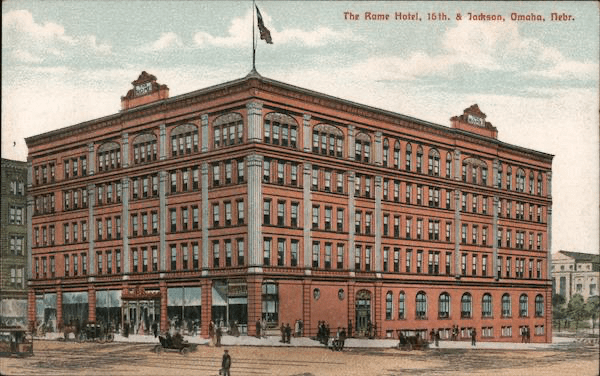
In 1908 Rex moved from the Millard to the brand new Rome Hotel. This is a promotion with meaning. He wasn’t just a barber. Rex was elite. He worked for Rome Miller not as a passing swipe, but as a master chosen to attend to the new barber shop at the new hotel.
Rex was World Class. A 1.

His address changed again, now at 2124 Douglas, still one half of a mile from the headquarters of the underworld. This building is gone too, replaced respectfully with an almost-Deco 1930s apartment building. Mittie is working at the YMCA and mysteriously staying at an address apart from Rex.
Despite their separate addresses they have another child in 1908, a daughter named Dorothy Francis. Very little of Dorothy is recorded and what is beats most works of fiction.
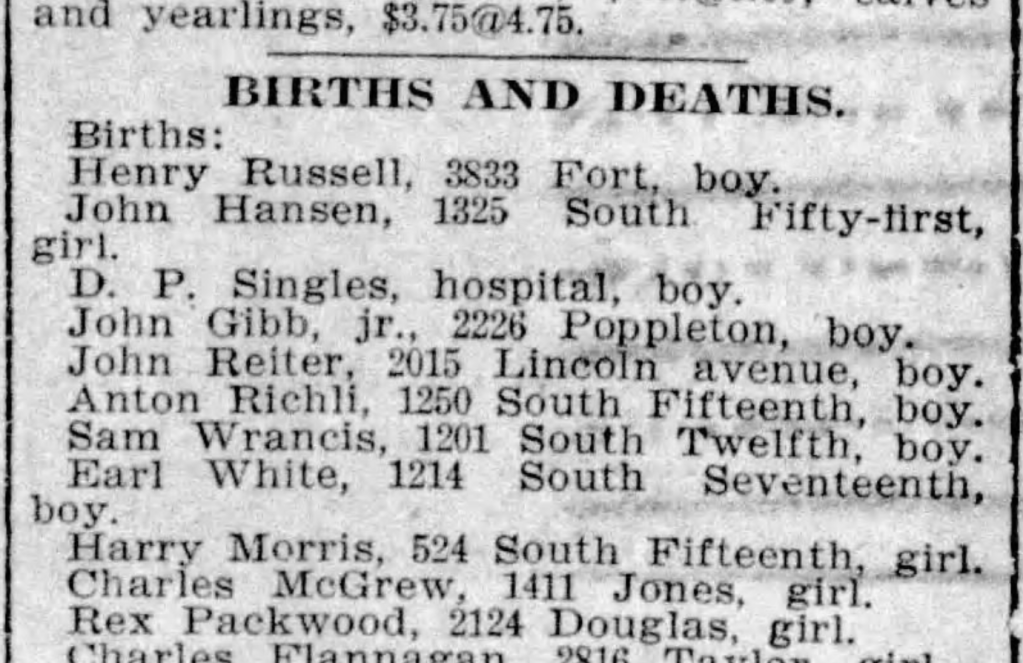
We can thread a guessed conception date of October 1907 with the directory recording their addresses around the same time. The records suggest that shortly after arriving in Omaha, their marriage became complicated and estranged.
Life as a barber was sometimes a cover for more complicated employment. You could be selling opium, taking bets or arranging hours of whimsy with easy women. You might just have information, or provide comforting repair to the inquitous and conniving. The moustache twisters.
For his years in Omaha Rex lives tucked within the breast pocket of vice and the underworld sphere of Dennison.
Back in 1905 in Iowa, whatever catalyst drove LaMorte Holley Spencer to leave Muscatine and the barber trade also drove Rex. They were both propelled by an unknown inertia. Spencer ended up quietly in Chicago, while Rex relocates to Omaha and deeper into the boiling flux of American organized crime. If Spencer was scared straight, Rex was scared crookeder.
Was Rex a gangster?
There is no way to be sure. What is a gangster? Rex was in the nose of Tom Dennison and Cowboy Jim Dahlman; he probably shaved them. His pattern of life suggests instability, addiction or vice, all correlated strongly with criminality.
For Mittie we ask similar questions – what kind of wildcat would choose to live in the red light district? Was Mittie doing her best to subsist in a rough city, or could we class her as a libertine, cigar-chomping gun moll? The YMCA at this time period was more aligned with a goody two shoes image. Yet … this is Omaha.
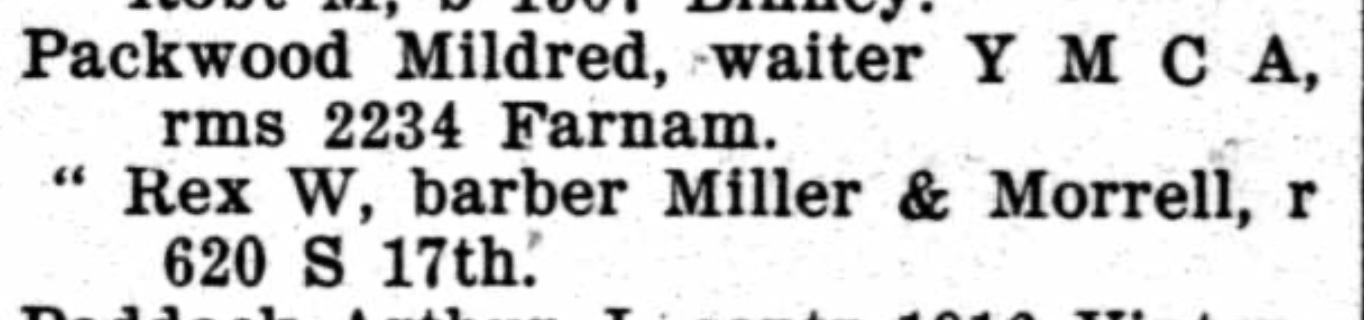
It’s 1909 and Mittie and Rex still report seperate addresses. Rex has moved from the Rome Hotel to the also elite Miller and Morrell at 214 S. 15th St. It’s a respectable shop and still deep within Dennison’s territory, only one block west of his headquarters at the Budweiser – perhaps the closest barbershop thereto.
Rex and Mittie are working and living in the nestles of the red light district. A persistent pattern while in Omaha is that they both remain in the Sporting District within a mile of the gambling and prostitution that provided the city it’s nature. Maybe Rex and Mittie aren’t sex workers and saloon keepers – but they serve the exact same patrons.
It probably wasn’t any one addiction that ensnared Rex – it was a whole lifestyle of vice. Wine, women, song as the standard fare. America before Prohibition. Repentant sin, but sin nonetheless.
In 1909, Mittie took out a loan for house hold goods, probably furniture and fixtures. $159.00 is about $5000 in 2023. Working as a waiter at the YMCA, she lived comfortably on funds she had borrowed from her future self. We can read a lot into this situation. A failing marriage in the midst of the nascent Flapper era and loans to cover a high standard of living; a recipe for disaster.

Mittie, as Mildred or Mrs. R W Packwood begins to appear as an active member of the Golden Rod Card Club. This is a women’s card club dedicated typically to some version of Rumy or 500. The card club was populated by the wives of hotel owners, local politicians, business owners and judges.
Heavies.
There were dozens of clubs with the same name in cities all over the United States, and curiously always associated with the wives of Freemasons.
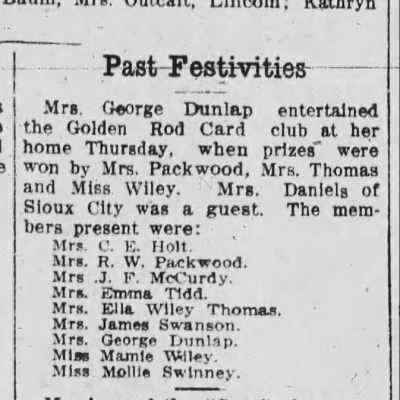
The problem with Freemasonry in this era is that for a time it seems that everyone was a Mason. It reveals no grand conspiracy that so many happened to have contact with a popular club.
If Rex was a Mason he made no noise about it. Freemasons have rules against drinking and adultering, so it’s strongly unlikely. None the less, when we survey his life we take note that he is near or alongside Masons almost the whole time. Another curiousity without consummation.

This address at 1824 Capitol is two blocks from the Masonic Temple, half a mile to the Budweiser and right inside the Sporting District. Persistently Rex and Mittie are in the center of the action.
Later in September 1910 Rex takes out a small loan to buy furniture.

In 1910 our sources get confused and conflicted. Mittie and Rex are both in the papers and city directory, that much is certain as we have seen. They have active lives in Omaha.
Yet they also appear suddenly and randomly in Cleveland, Ohio, 800 miles away. An easy train ride, but long. Cleveland in this period is known for its red light district, industrialized labor, and clandestine access to Canada.
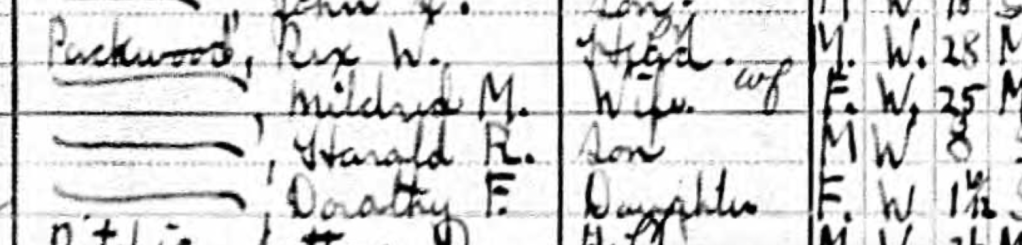
This is certainly our Packwoods in the Cleveland census. It lists their proper ages and birth locations, and Rex is listed as a barber. Mittie confounds the data by appearing constantly in the papers at card parties in Omaha at the same time, almost weekly.
It is unlikely they were all traveling back and forth. What fits best is that Rex lied to the census taker and filled in the data as if his family were with him. In reality, they were spread out across the country; Mittie in Omaha, Harold in Iowa, and youngest Dorothy in quadrants unknown.

In the 1911 Omaha directory Rex is working at yet a different barber shop, now a smaller outfit run by a man named H M Whitmer that can be found at 1605 Farnam, still within the bounds of the Sporting District. This is probably erratum caused by the lag in collecting and printing the directory. By late 1910, Rex has left Omaha.
Later in 1911 this posting appears in the papers in Omaha; it announces a coming court date for Packwood v. Packwood, case no. 114-357. The divorce of Mittie from Rex. In 1911 one could only divorce their husband if they met one of three qualifications: abandonment, adultery, or extreme cruelty. What sin in particular Rex was found guilty of is lost to time. In December of that year the case was ruled on. Throughout this whole time Mittie is routinely in the Golden Rod Card club postings and Rex is no where to be found. He might not have known he was divorced, or he might not have cared.
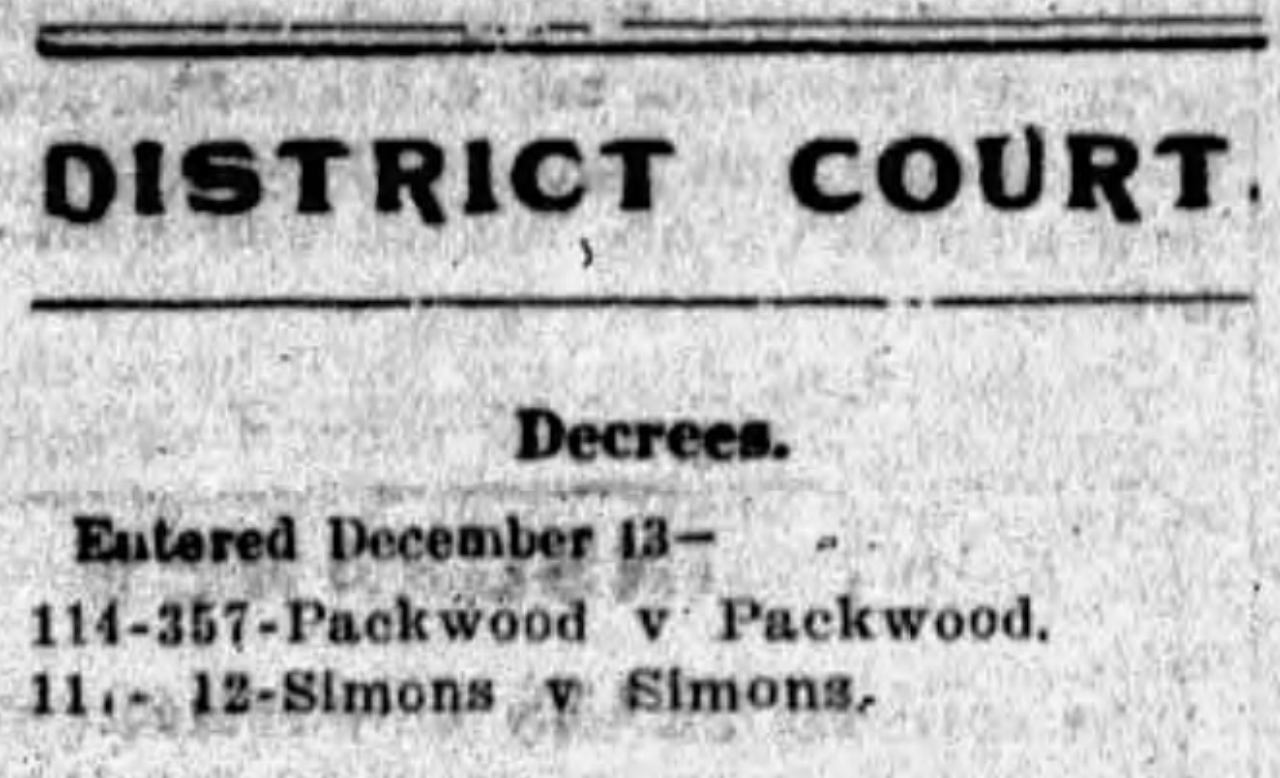
Incidentally, the records of their divorce were lost in 1919 when Pickhandle punished the disloyal electorate for siding against Dahlman, and used his media controls at the Omaha Bee to cause a race riot which ended in the bombing of the court house and burning of the local records.
Divorced and still in Omaha, in late 1912 Mittie took out another loan for another ~$5000 in modern money. A single working mother with an albatross of debt in a wicked city.

Rex has slipped from our fingers. We will find no more referrence to him in Omaha after late 1910. He left no trace at all until 1913.
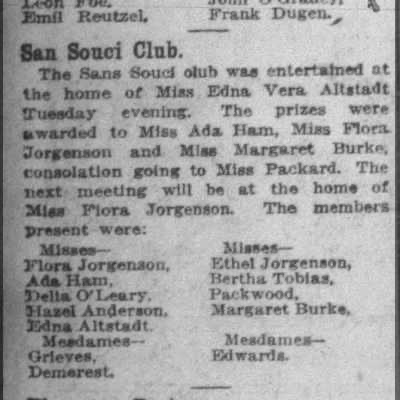
The last published meeting of the Golden Rod Club with Mittie is in November of 1912. Some time after that she appears in the Saunier club and finally in the San Souci Club in late 1913. Saunier means one who makes salt; the arcane meaning of this is lost. San Souci means “care free” and was not an uncommon phrase, also the name of a fine palace in France and once against strongly associated with Freemasonry.
This posting from December of 1913 is her last record in Omaha. The San Souci club were the wives of laborers and workers, no longer was Mittie rubbing elbows with Omaha politicians and bankrollers. Whatever inertia had brought her to the higher towers of the card clubs was sputtering out.
Rex is not to be found in 1912 or 1913.
We might presume he is set up in Cleveland, yet he left no footprint. Maybe he is lost on the train, or on some kind of bender. Perhaps he is being as quiet as he can out in Cleveland to avoid rousing whatever ran him out of Omaha.
Mittie quits Omaha finally and she and Harold return to Ottumwa. In 1914 she visits W. M. Packwood, who we assume is a typo’d William Packwood – Rex’s father. Dorothy is not mentioned. What did they speak about?

In 1915 Dorothy reappears, in Des Moines, alone. Marked as an orphan at the age of 6 we can only guess how she became separated from both Mittie and Rex. Des Moines is on the western side of the direct trip between Omaha and Cleveland. Was she abandoned? Did she run away? What kind of horrors did a six year old see on her way between Omaha and Des Moines?
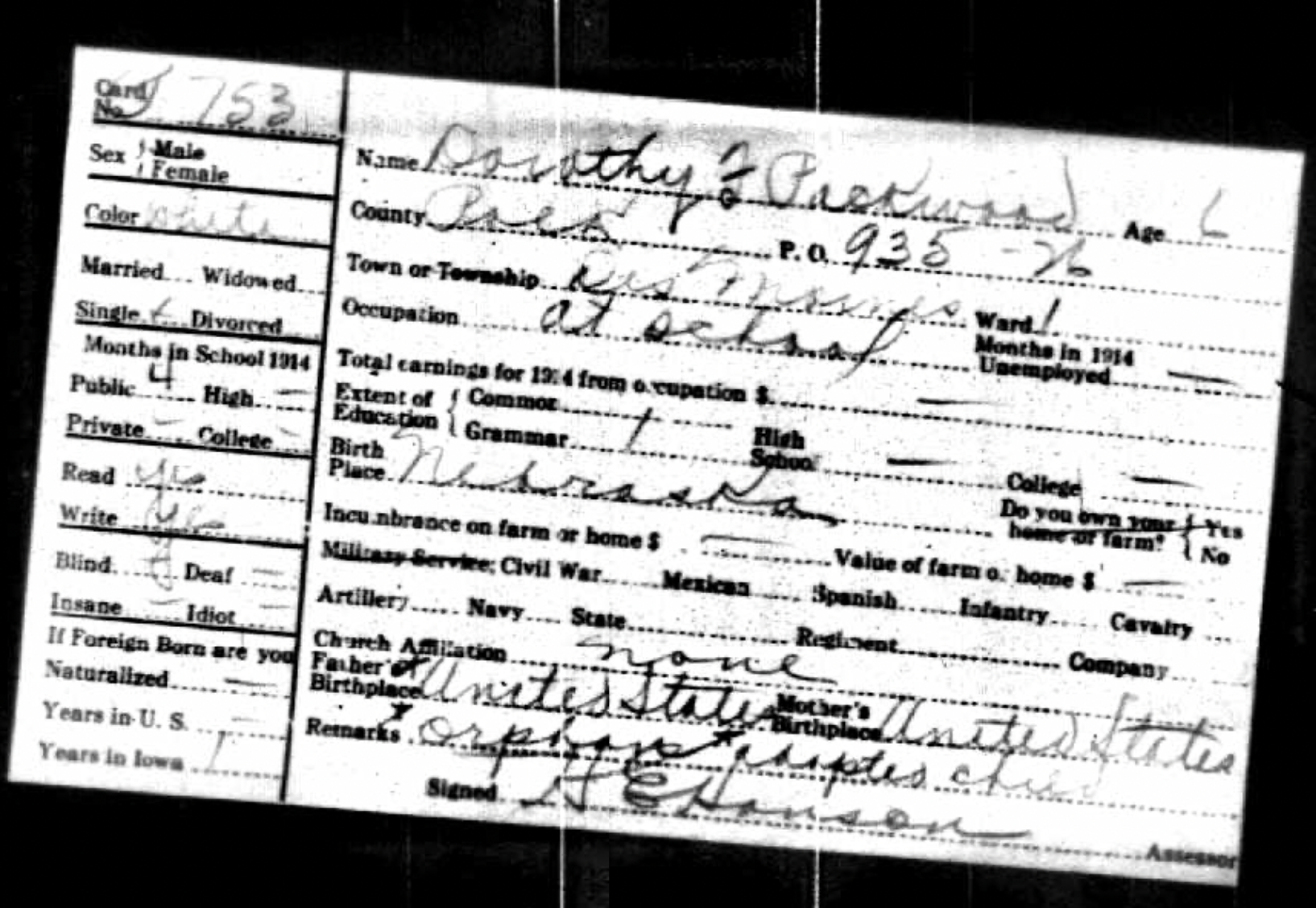
A bleak snapshot.
Rex had moved to Omaha to be closer to the chaos and din of the wild city, into the heart of the darkest parts of society. Family life didn’t fit. Rex and Mittie kept different homes, Rex had a different job and address every year, always directly in the red light district.
Rex worked directly for Rome Miller, friend of Dahlman, the crooked mayor in the pocket of Pickhandle. He then worked at a barber shop even closer to the headquarters of crime at the Budweiser Saloon. If he wasn’t a gangster he should have been. He shaved icons of crime, he overheard their secret conversations.
His family atomized.
Rex slipped into the aether, quietly like a snake.
4. Cleveland
 Jack Southford