It’s 1890 and Cleveland is Paris in America.
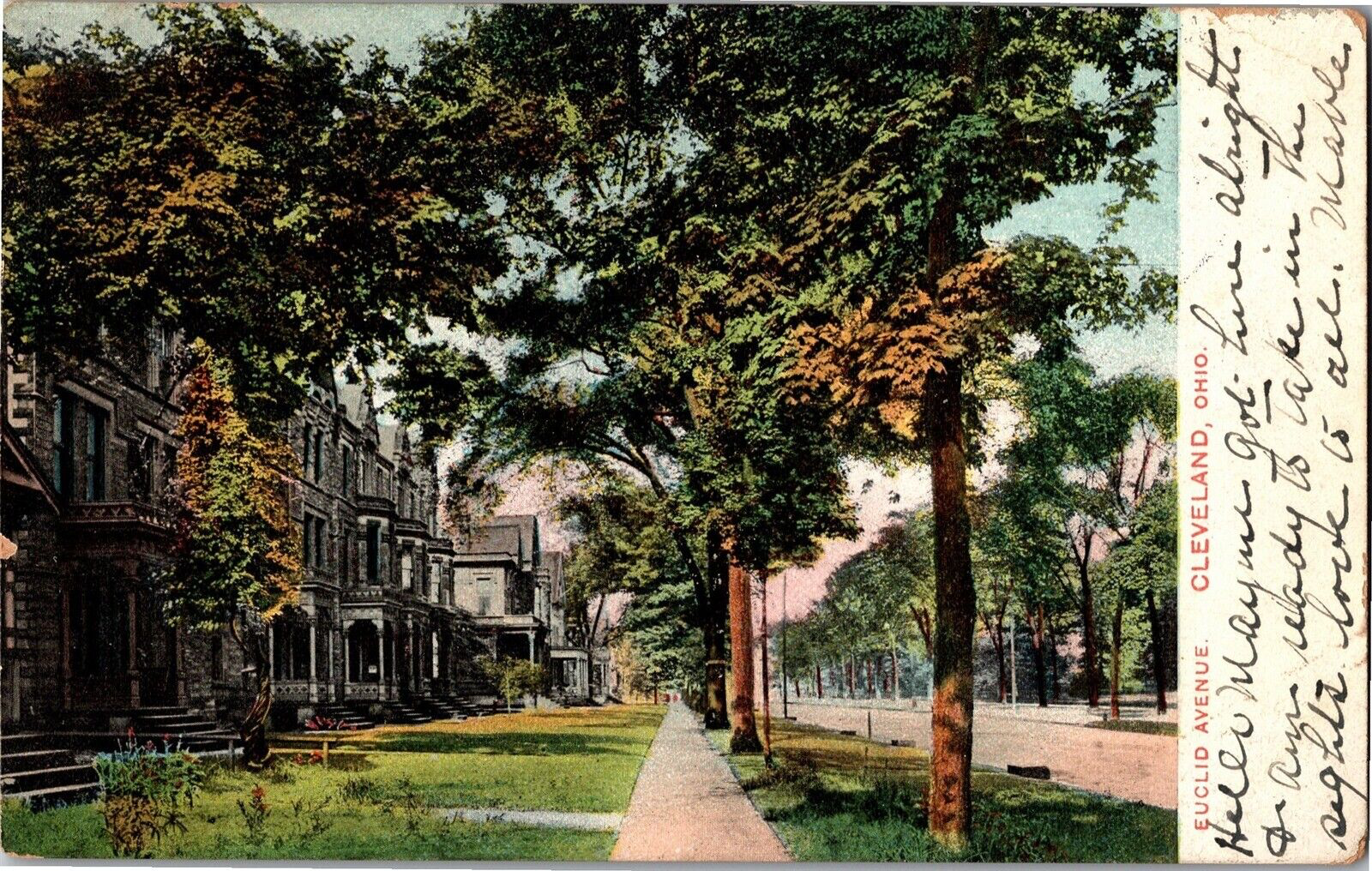
A beautiful city layered around the parks and towers of landed industrialites. Astronomical wealth drawn to this place for it’s location and proximity to the grand vehicle of commerce, the Great Lakes. Cold but necessary. Before the dominion of the train, industrial action was limited to marine highways like the Great Lakes. Cleveland was imperative for the monocle’d. A monied city. A utopia for the monopoly man. The upper class redoubt of Victorian Americana.
Running vaguely east from the choke of the city is the beautiful Euclid Ave, widely known for its long procession of epic mansions in Richardson Romanesque style. The whole shebang built to the appointment of the horse-drawn industrial elite. Proper Victorian carriages with prancing horses and white suited pilots pulled beautiful women in corsets and boater hats down cobbled avenues. Clop clop clop. The most intricate stone work, streets, and arches. The entire city a holy edifice to the gods of industry.
This gilded age couldn’t last. Like the Ohio summer it could only displace from the mind the misfortune of the Ohio winter; all things must end. See now a rowdy crew of inevitible foes approach in silence. Industry brought the train; the train brought the people. Riff Raff. Hoi polloi. The population of Cleveland tripled between 1890 and 1920.
The erudite Rockefeller caste moved east to what would become Cleveland Heights – a distant suburb for the modern rail commuter. It was far enough from the city to lower the ratio of rabble to gentry. A flow of people yielded into Cleveland looking for their slice of the industrial pie while the ultra elite removed themselves from the same. The more poured into the center the further the edges spread like wings in flight.
The mansions were massacred into boarding homes or vindictively destroyed by their former owners as they quit the inner districts. Stained glass smashed, murals defaced, chandeliers thrown down ornate staircases – all efforts at keeping the finery from the approaching rabble. Scuttled ships in the class war.
The area has been more than razed. Removed brick by brick then replaced and razed again; now a healthy freeway entombs whatever cobblestones might have remained.
Paris abandoned. Abused mansions reimagined as blight and torn asunder.
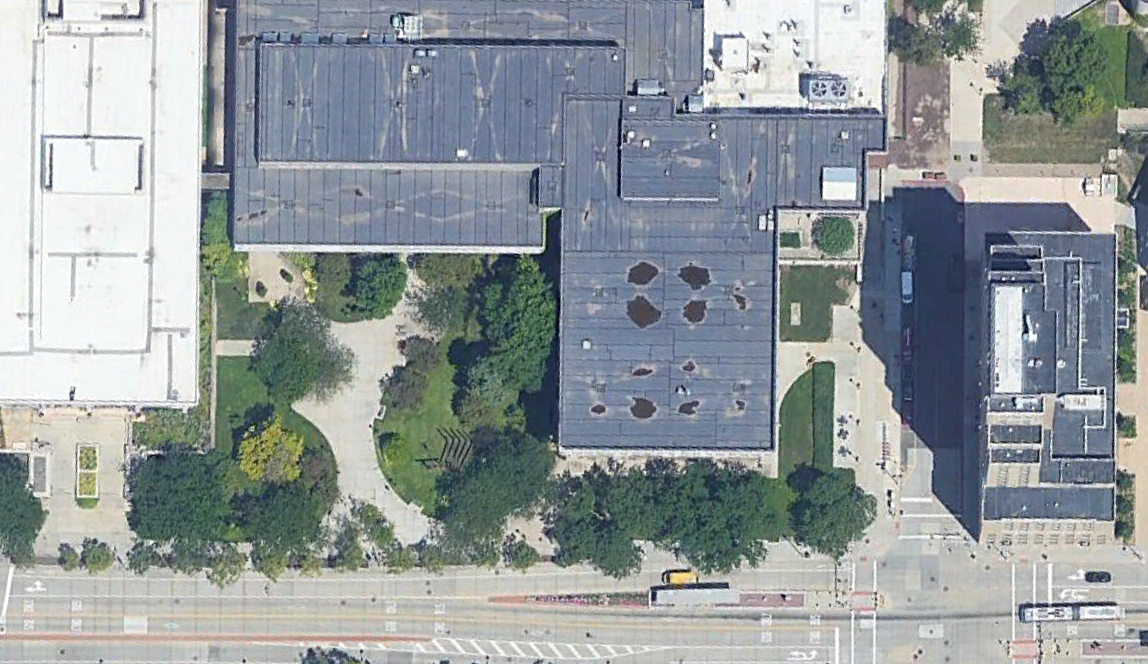
Once a shining city vomiting cash, by the 1910s Cleveland had become a bejeweled obstacle course for those seeking their fortunes. Still a lot of money to be had. The Suckers-born-every-minute descended into the heart of Cleveland and rode massive ripples of capital to the outskirts, fingers crossed their ships would beach within the bosom of the landed. Between them and their goal lay the eastern portion of Cleveland – a sprawling red light district flanking the deteriorating Euclid Avenue and centered around the Hough neighborhood. A swampy morass of vice.
A cartoon horror manse on the edge of a bayou; prestige now peeling and dusty.
What evil lurks in these murky shadows.
Rex gets to Cleveland late in 1909.
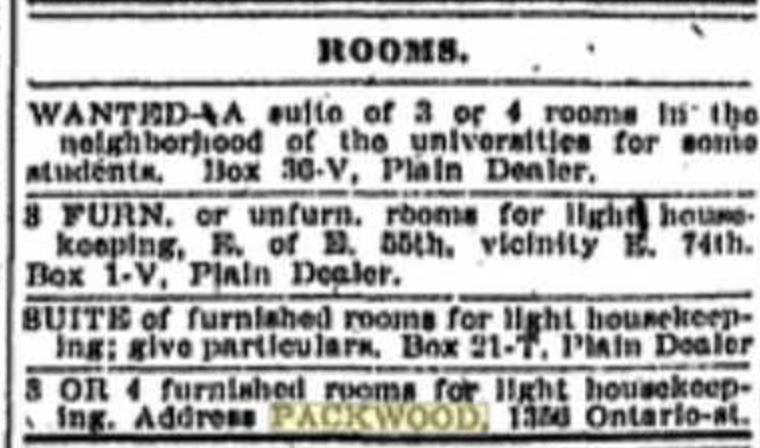
The earliest record we find of a Packwood in Cleveland is an advert subletting rooms at 1356 Ontario St.
Later in April of 1910, a news posting in the Plain Dealer lists R. W. Packwood as one of many winners of a contest. He guessed the correct numbers for a game.

This second entry confirms that it was Rex operating out of the building on Ontario street the previous year in 1909, unless this is a colossal coincidence.
The building at 1356 Ontario street was removed from this earth long ago. While it existed it sat alongside similar walk up brick flats in a very fine part of town. A block north of Cleveland Public Square and facing the marvelous new in 1910 Brotherhood of Locomotive Engineers Building. A short walk south was the rail road station serving a half of a dozen lines. A stroll north and one found Lake Erie with it’s astounding gaze and quick access to Canadian contraband. A very posh location.
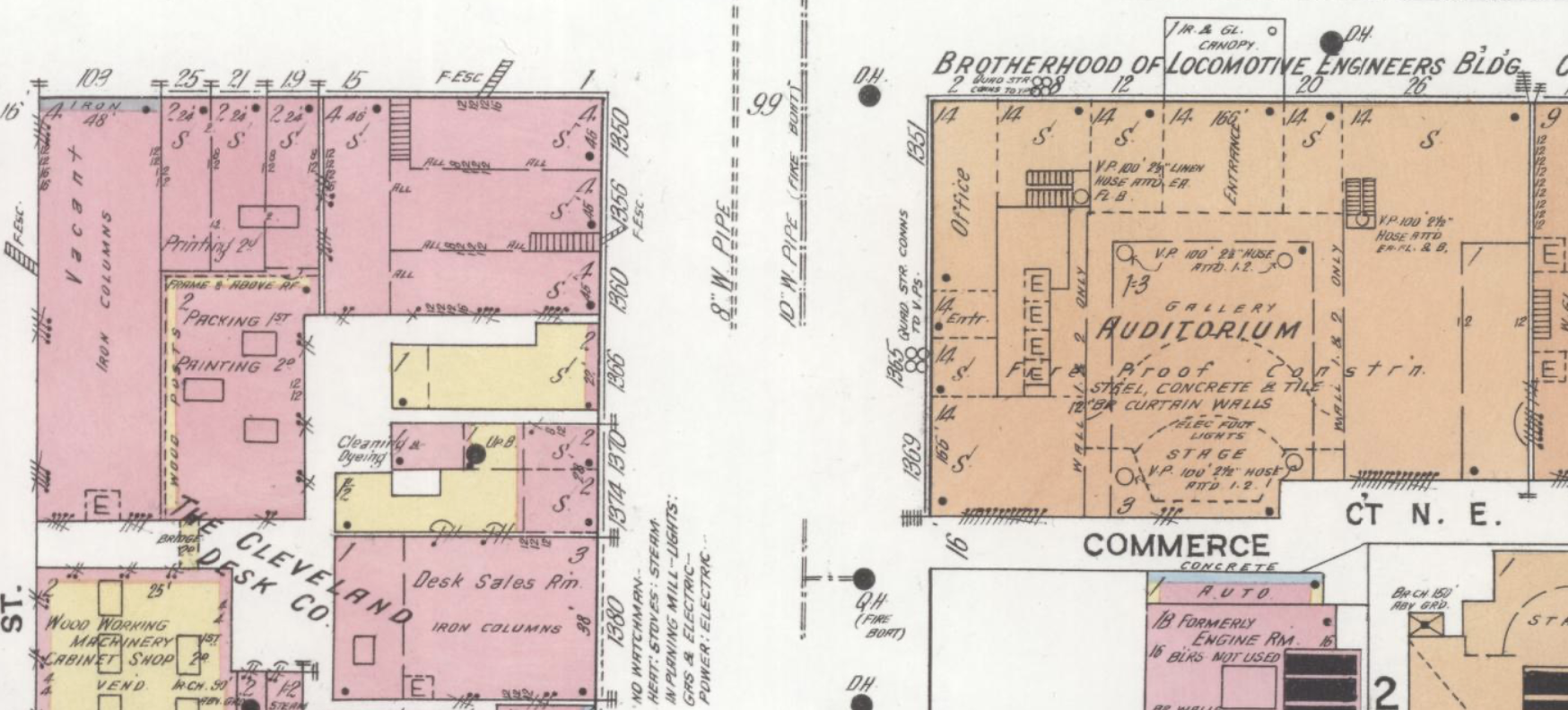
We have to assume Rex got to Cleveland with cash on hand. Enough to rent out a large enough portion of this building to sublet it. Additionally, this is 1909 – Rex continues to hold addresses in Omaha with Mittie and his children for another two years. In October of 1909 we we first find him in Cleveland, Dorothy is sixteen months old. It’s about 800 miles by rail between Omaha and Cleveland, about ~$500 in 2023 dollars to make the trip depending on level of service.
In the 1910 US Census, Rex also is listed at 1522 r Payne, with Mittie, Harold, and Dorothy. This is quite confounding as it overlaps eggregiously with other data. The 1910 census record is definitely them, however it’s the only record of Mittie, Harold, or Dorothy being in Cleveland. We previously surmised it’s possible Rex was just answering questions, and the family may have never been in Cleveland.

In the 1910 Cleveland city directory, Rex appears as a barber living at the same address of 1522 r Payne. The 1910 directory would have been released in 1910 from data gathered in late 1909 and early 1910.

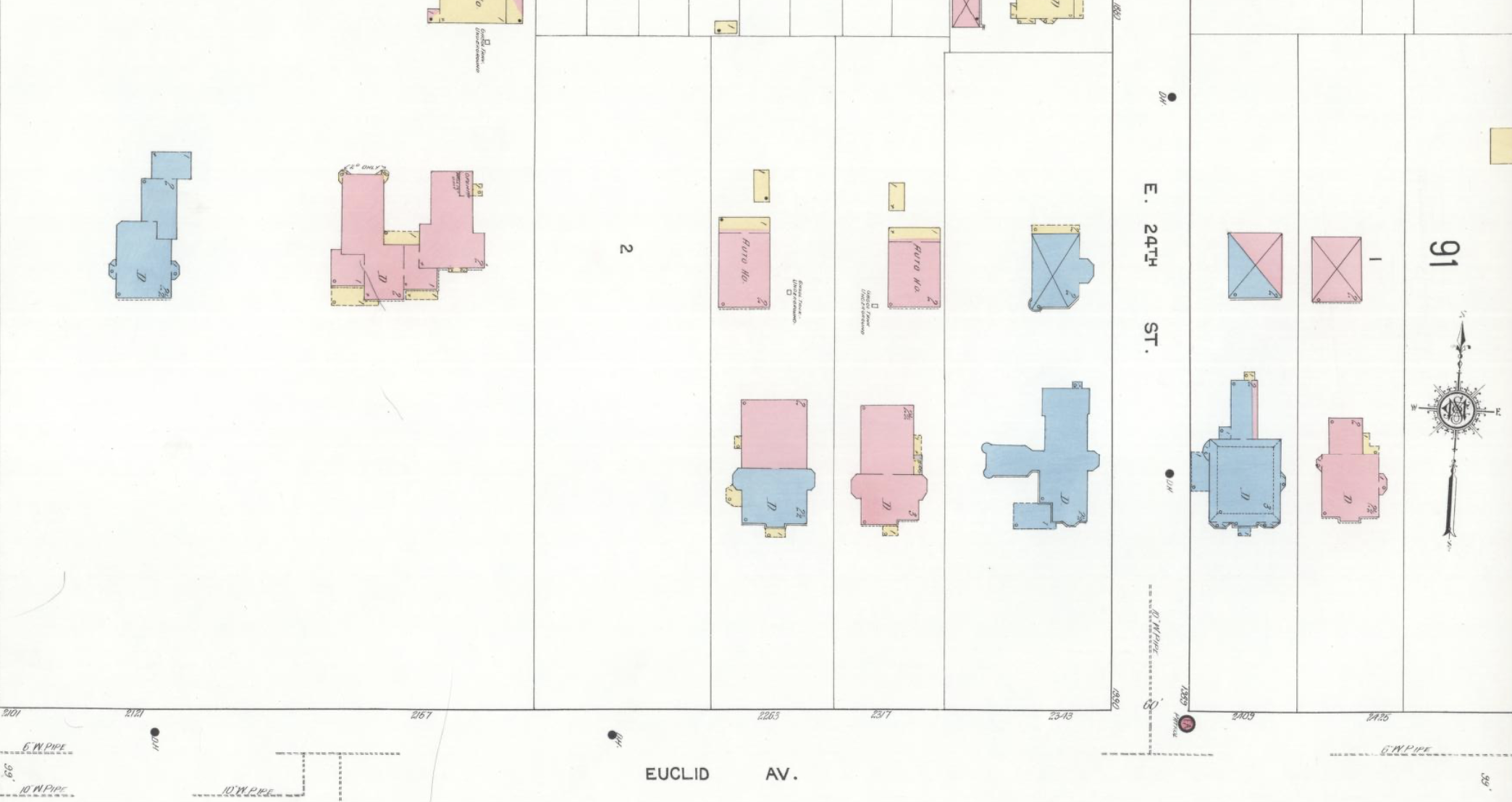
1522 r Payne is probably the basement of one of the buildings outlined below, the actual numbering lost to time. It was about one mile east of the address at Ontario and the Cleveland City Square, just about two blocks north of the famously degentrified Millionaire Row on Euclid avenue.
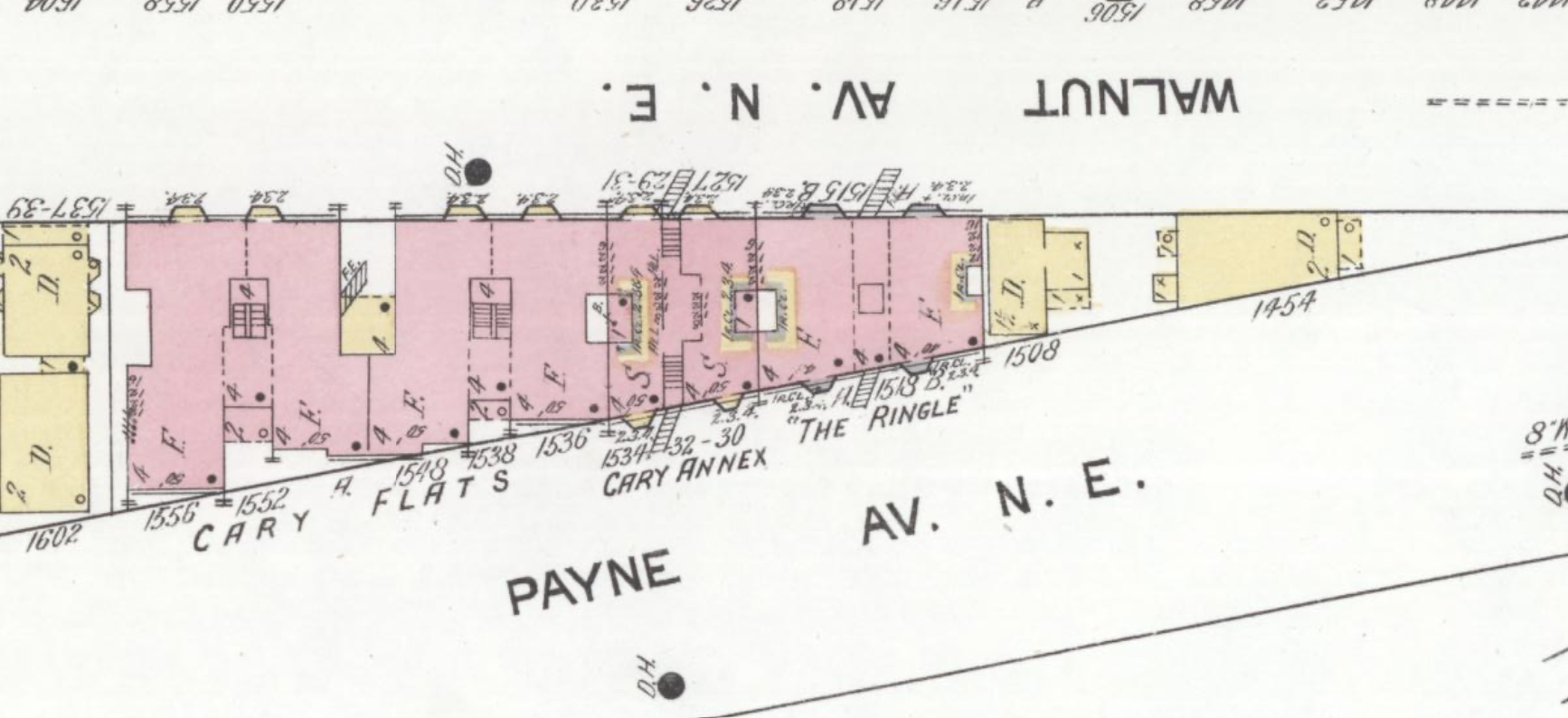
This was Cleveland at the zenith of a pivot from industrialite utopia to industrialized dystopia. The millionaires had moved en masse out to the Heights but the city was ever crowded with seekers, graspers and the occasional hard working soul. There was a great deal of former prestige to be rented. All of it bathed in soot and sweat, occulted away under layers of cracking paint.
The puzzle pieces near 1910 don’t fit together nicely. In 1909 Rex is in Omaha working for Miller & Morrell, right under the nose of Pickhandle. Around 1910 he has two addresses in Cleveland. In 1911 he is listed back in Omaha, working for H. M. Whitmer. Mittie is listed in Cleveland and then back in Omaha where she divorces Rex in late 1911.
Rex is under the employ of gangsters in Omaha.
He slips to Cleveland and has two addresses.
He backslides to Omaha (or does he?).
He vanishes.
1912.
1913.
Two years completely absent of records for Rex. Whereever he is, he is quiet about it. He does not appear in the Cleveland city directories for these years. He does not appear in Omaha. He does not appear in Iowa.
Vivian Genivieve Fenstemaker was born in 1890 in Chicago and she defeated four husbands before she departed this mortal plane in 1964, having outlived three of them.
In the 1900 US Census she is listed as the adopted daughter of Charles and Carrie Fenstemaker. Charles was a blacksmith and they lived in Marion Co, Illinois, east of St. Louis. By 1910 the family had moved deeper instate to Amboy and Vivian is a twenty year old sternographer in a law office. Not a bad line of work, one that suggests she was competent and intelligent.
Cleveland called and she answered. She moved into the seedy district some time before giving birth to her first child in December of 1914, William LeRoy Packwood. There is no birth record. She is twenty three.
We presume she had “married” this barber named Rex Packwood, the father of William LeRoy. There is no marriage record. What records do exist only reflect the birth of William L and her change of name. Excluding these, there is no other record for Rex, and no direct record at all for 1914.

Rex himself finally surfaces again in the Cleveland city directory, after being absent from the records for years. In 1915 he is listed working as a barber and living at 1276 Addison and 7111 Duluth. We must assume that Vivian and little William LeRoy are living at one or the other. These two addresses are essentially opposing sides of Superior Avenue at the 7100 block, on the northwest edge of the notorious red light district, the Hough.
The Hough is centered around 79th and Euclid, in the 1910s it is awash with brothels and a recent growing surge of speakeasies as Prohibition softly crept over the horizon. Cleveland is a dirty city overfull with fresh faces, the Hough is the part of the town the cops seem to ignore. Rex makes his tastes opaque. A lifestyle of vice. Vivian also at the breast of the red light. Something had compelled her to leave the comfort of the stenotype and pendaflex; drove her into the heart of vice in Cleveland. What was the profile of a person living in this part of the city? Artists, criminals, prostitutes, minorities and the poor would have been drawn in for its affordability, location near employment, and access to its specialized goods and services.
Did Vivian hit a snag back in Amboy? Was she chasing a vice, or forced to flee a bad situation?

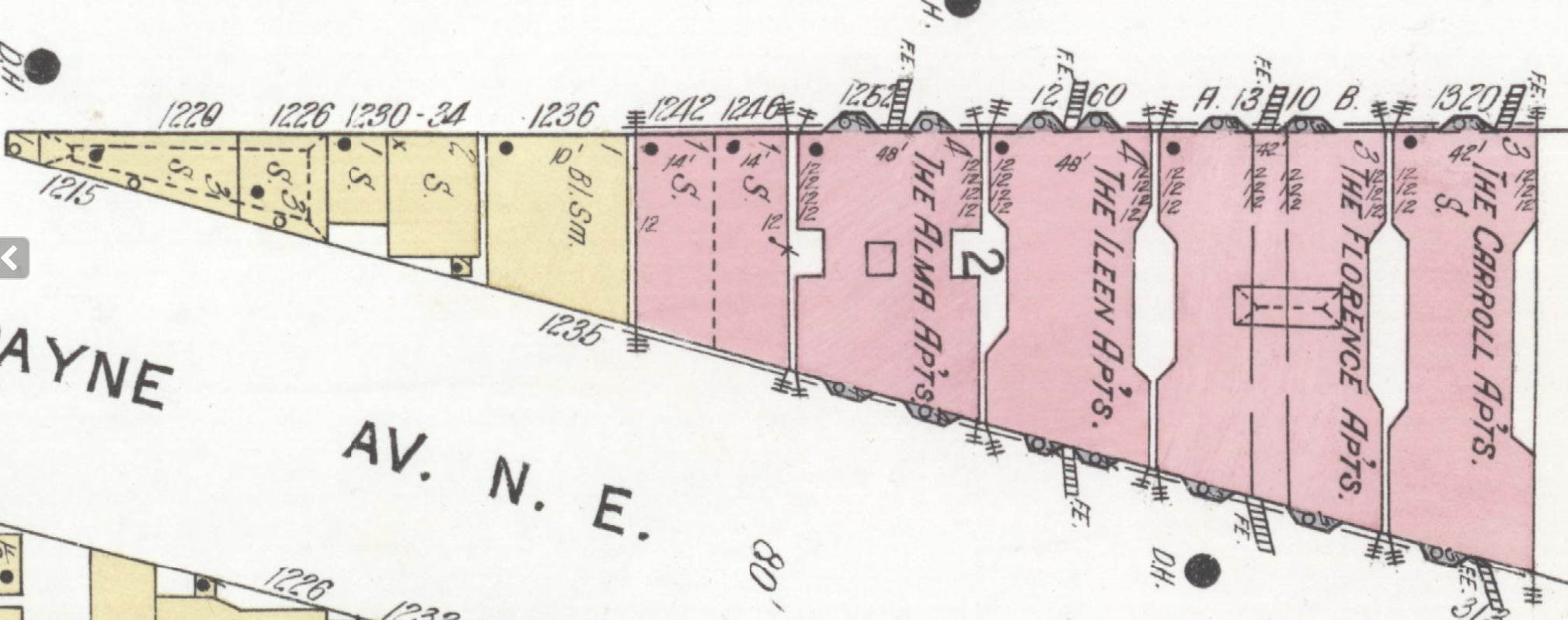
The next year in 1916 Rex (et al?) domiciled at 1252 Superior, which was suspiciously similar to the address on Payne, and just a few blocks away. Like the unit at Payne, it was the rear of a stone faced walk up flat iron building just a stroll east of the bustling downtown. It fits a pattern; five addresses in four years. He was coming and going. He lived out of his bag.
He would rent a place; he would leave. Repeat. This would best explain the multiple addresses.
In 1917 Rex is listed in the city directory again as having two addresses, both near each other and in the heart of the Hough red light district. Still coming, still going.

6911 Cedar and 2126 Van offer another double address mystery. They are right next to each other. Today all that stands on Van is the two unit dwelling at 6915 and 6917, the rest has become overgrown yard. Even the street, Van Pl, seems to no longer exist. This isn’t dead center of the red light district, but we’re close. Hough runs between 55th and 105th, making ~70th fairly deep within.
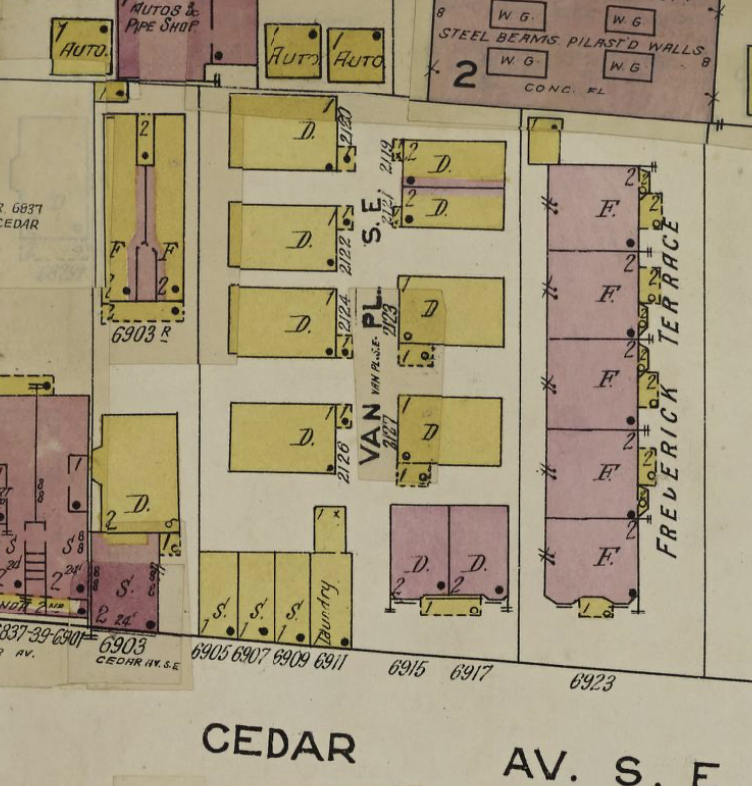
6911 is labeled as laundry. Perhaps Rex was working as a barber out of this location and keeping his house behind? Is he perpetually keeping his wife and children elsewhere, just like in Omaha? No further clues remain to inform us.
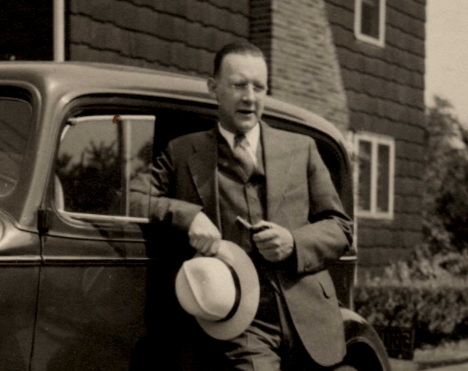
Ervin J Rust was a round headed man with similarly round glasses and a can-do demeanor. In his photos you can feel his exemplary gusto. He looked great in a suit vest with pencil in hand, working equations; he had slide rule aesthetic. His first job at 19 was as a draftsman, the gateway to his career as an engineer.
On August 1st of 1917 he filed a patent application for a motorized hair clipper, submitting the patent with two men named Rex Packwood and Eugene Hazelette.
Google Patents entry for the Motor Driven Clipper Patent, US1281214A.
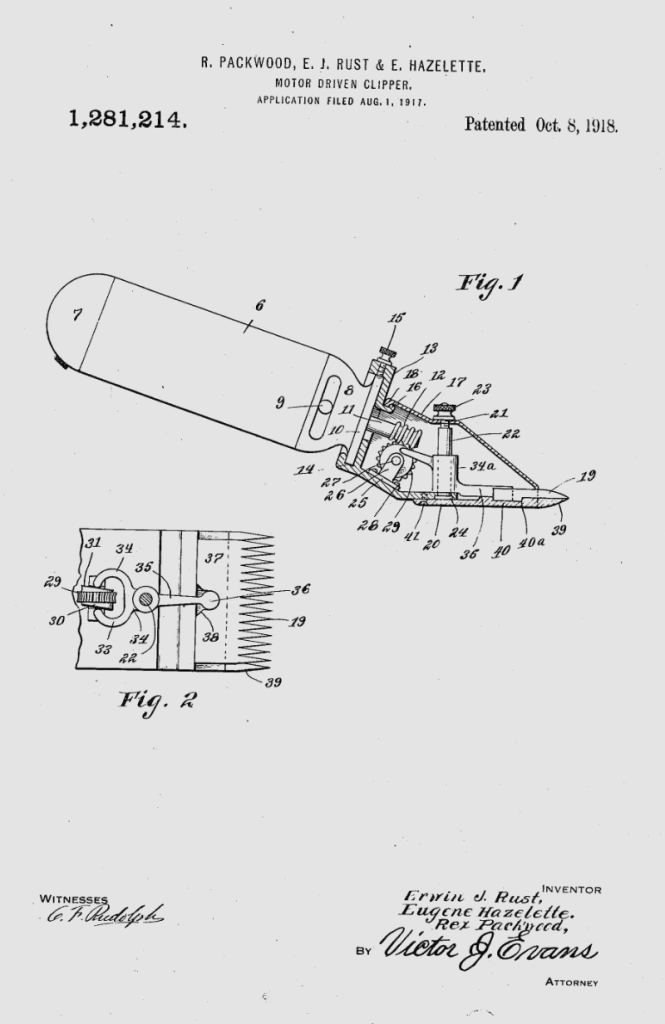
Rex is listed first on the title in discord with any semblance of logical order. It is endorsed at the bottom by the inventors with their names in alphabetical order by first name.
The order of names on a patent does not denote depth of contribution. The Motorized Clipper patent has the names out of alphabetical order; this was probably chosen by the applicants.
It is more accurate to say they invented it together, despite Rex appearing first. They were a perfect recipe to invent a motorized hair clipper; Rust was an accomplished draftsman, Hazlett we find made tools, and our man Rex was a master barber.
Curiousity forces us to take a brief detour. It’s inexplicable that the scoundrel we are chasing also happens to have invented an appliance we all own. Why doesn’t your electric trimmer say Packwood on it? Two men share that fame; Schick and Wahl. Schick lived for some time in Ottumwa (not concurrent with Rex) and holds the patent for shielding the blades within a sort of box so as to not pinch the skin. Schick was a confirmed huckster son of a huckster; but the attribution is clean. As for Wahl, he dispensed with the electric motor altogether and based his clippers on an electromagnet; hence it makes that strange urrrrrrr sound and occasionally refuses to function at all.
As for the contribution of the Motorized Clipper to the pool of invention, it is cited by a half dozen or so mechanical patents that use similar methods for turning rotating power into oscillation. Otherwise it is just another one of thousands of dusty patents of unrealized fortunes.
Rust escaped Cleveland in the 30s. He resettled into Charlotte, NC, and became a gem cutter while remaining an engineer associated with AM Bosch. His obituary lists him as the inventor of the electric hair clipper.
Eugene Hazlett is harder to track; from rural Pennsylvania near Pittsburgh, the son of an oil pumper and general laborer. As an adult he kicks around Cleveland working as a tool maker before becoming a real estate agent. His marriage to Mabel from 1918 remains stable; they have one child named Audray in 1919. By 1930 they keep a number of boarders. In 1940, listed with them as a boarder is Vivian – having been twice married and divorced since Rex. There is no telling why she and Donovan split; her third husband Gorsuch died in 1932 after only a few years of marriage. Both happened after she was abandoned by Rex. Hard luck.
In 1917 Vivian and Rex welcomed a second son unto the earth; Kenneth Eugene Packwood. Often cited in paperwork as just Eugene, the obvious source for his name being dear friend Eugene Hazlett.
It’s 1918 and the Great War has forced the USA to draft its muscle into violence. We catch Rex in Ottumwa, Iowa, with Vivian. It lists a permanent address of Caldwell Park and a business address of 131 Main. He is a barber.
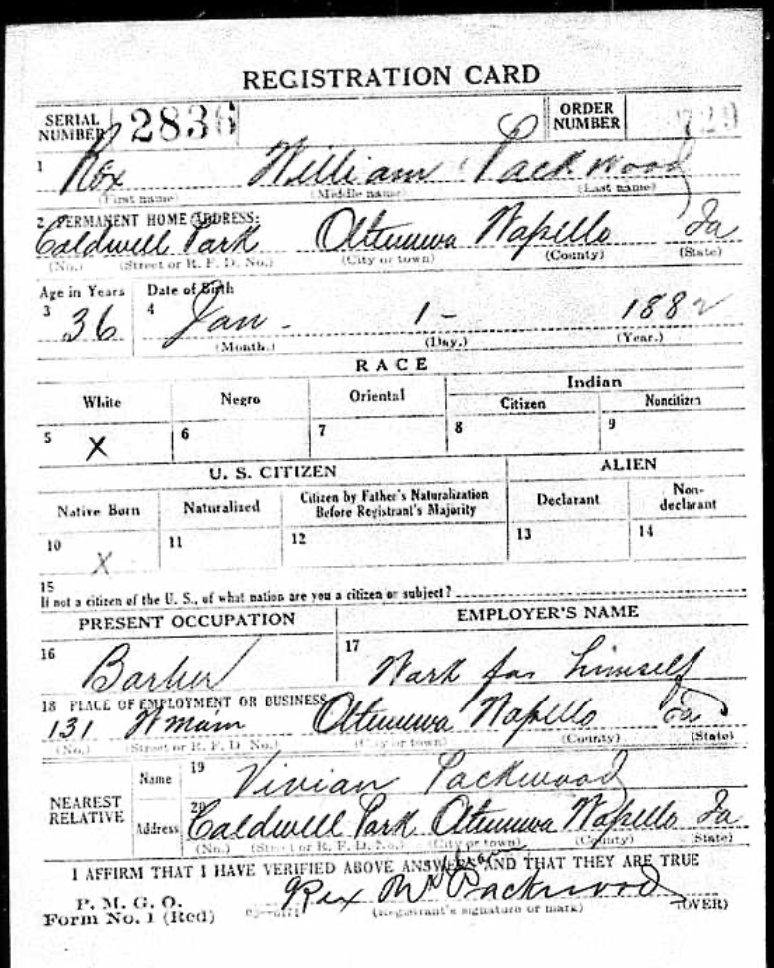
If not for the happenstance of a draft card, we would have no indication that Rex and Vivian spent any time away from Cleveland, more than 600 miles away from Ottumwa.
Caldwell Park is a humble 7 acres of treed hillside. In 1917 it was set up as a temporary barracks for the defense of Ottumwa from the Kaiser. While it is possible that the next year in 1918 these barracks house Vivian and the boys, it is befuddling.

131 Main seems like a novel spot to work as a barber. It’s still standing along a stretch of quasi abandoned buildings in the midst of a renewal. The area is sort of choked off by the history of highway expansion. A time capsule.
Was Rex here in Ottumwa only in 1918, or is it just that we only catch him in 1918? How much time does he spend in any one location? When he moves, how far does he go?
Next year in 1919 and Rex is back in Cleveland, now living at r 1200 Addison. Whatever compelled him to attend to Ottumwa compelled him right back again.

This is just north of Superior and right near that magical 6900 block that seemed to draw Rex. It’s not quite the Hough district, we’re just NW of it, within the orbit.

In 1920 Vivian and Rex have a third child, Marion Packwood, born July 18.
In the 1920 US Census, Rex is living at 6911 Zoeter Ave, right next door to Ervin Rust. Close friends for years.
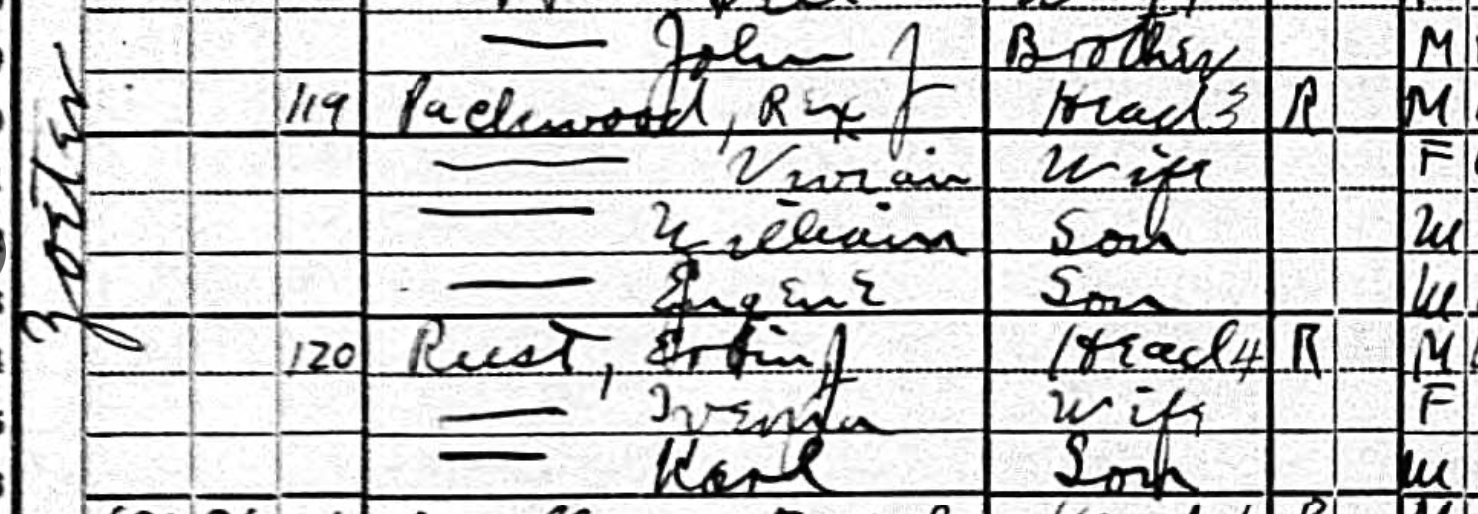
This feels like what must have been a good time for Rex. 6910 is now a vacant lot amongst a series of decent homes on a comfortable block just left of center of the Hough district. In 1920 a respectable family man could stroll a few blocks to drug and sex their troubled mind into submission. Rex was married with three children, living next door to a dear friend and colleague. He’s 38 years old and the future is wide open.
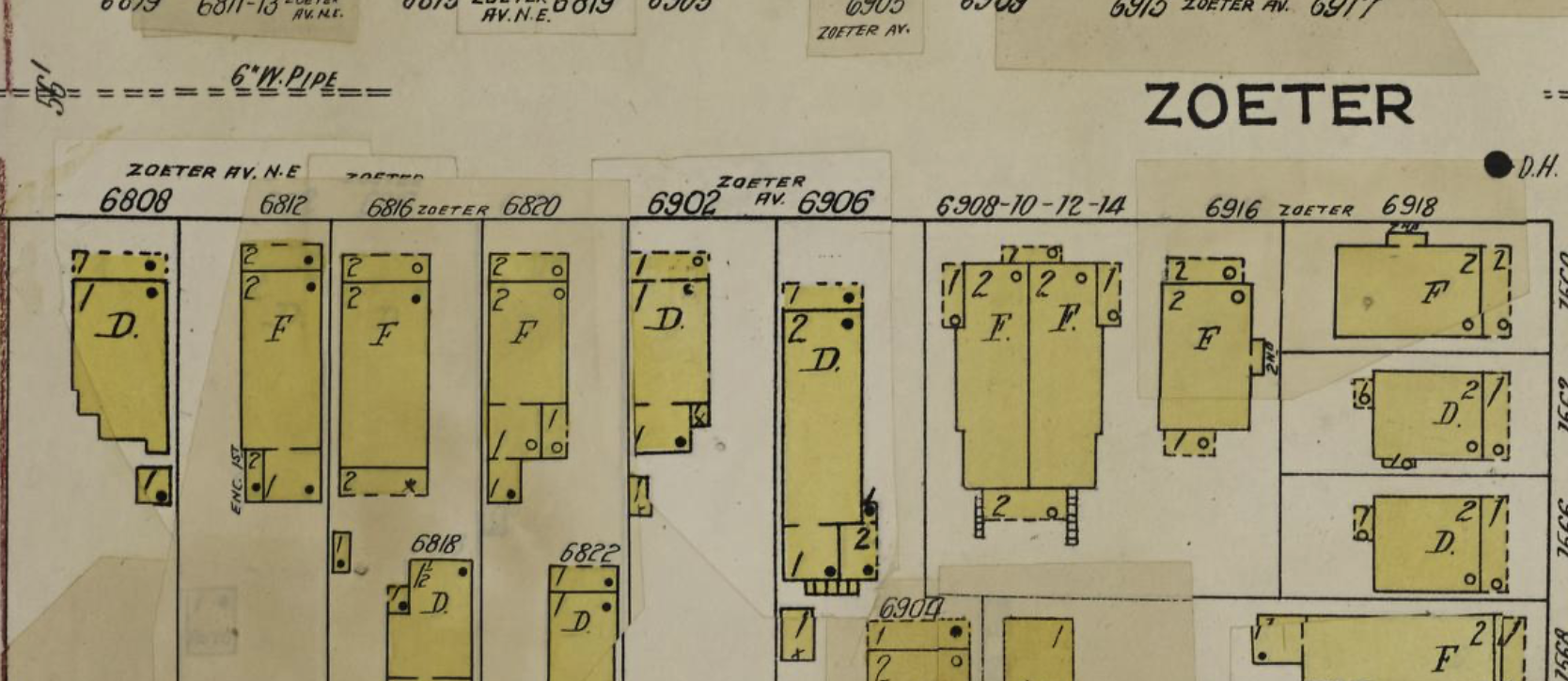
The last we hear from Rex in Cleveland is this final record from 1921 of him living on Zoeter Avenue. It is the only record of Rex in 1921.

There is no record of Rex in 1922.
In 1923, Vivian appears alone in the Cleveland city directory.

Rex has vanished once again.
5. Cincinnati
 Jack Southford